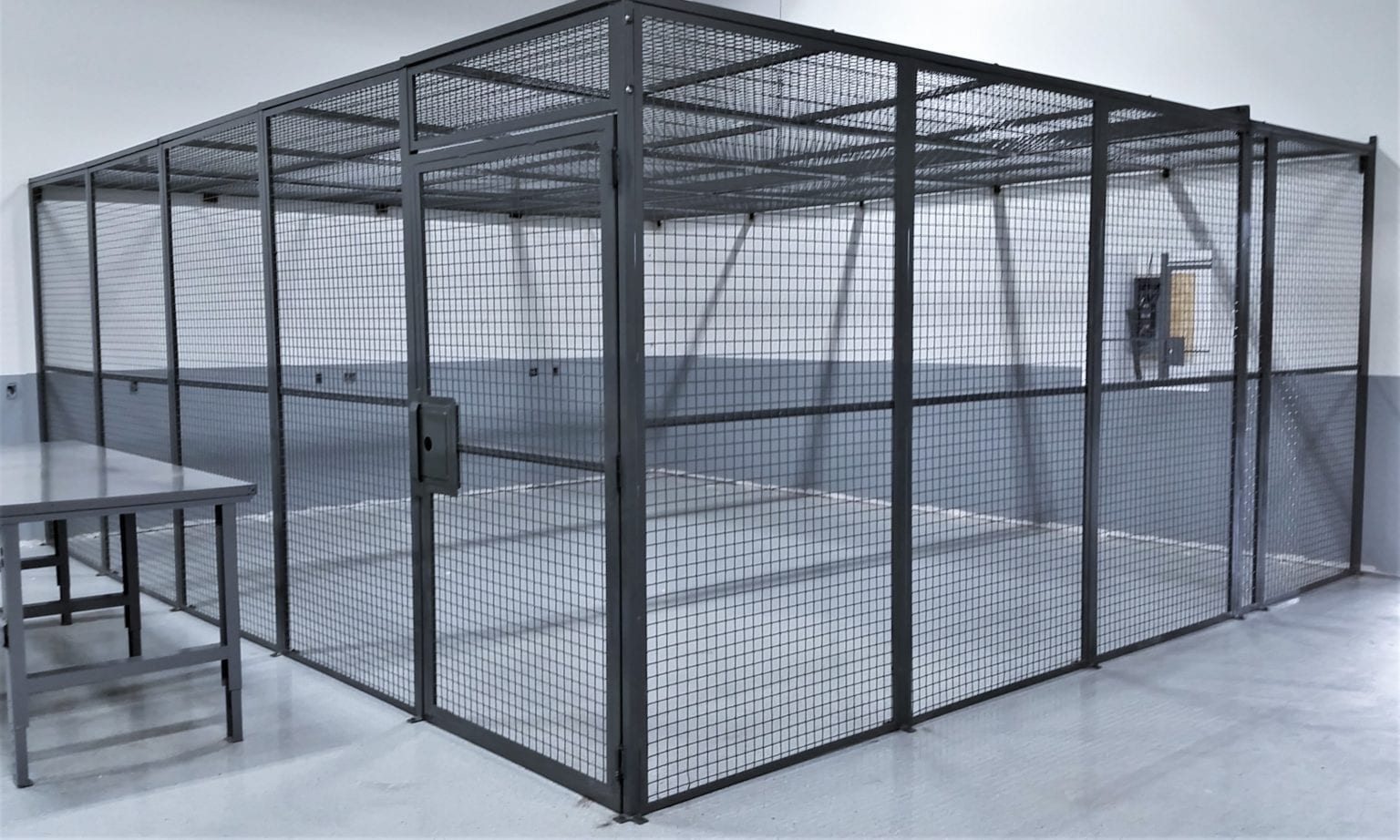
A wire mesh partition is a high-strength security barrier designed to protect high-value inventory in industrial and commercial environments. When a facility manager or business owner identifies a need for a secure storage area, the immediate instinct is often to call a general contractor for a drywall build-out. This traditional approach frequently leads to the "drywall trap," a phenomenon where a simple security upgrade evolves into a multi-month project bogged down by bureaucratic red tape, permit purgatory, and excessive labor costs.
Choosing a modular security cage over traditional drywall construction offers a significant advantage in speed, cost-effectiveness, and logistical simplicity. By understanding the true expense of permanent construction versus the efficiency of the Modular Edge, decision-makers can avoid the hidden killers of project timelines and implement reliable security solutions in a fraction of the time.
The Drywall Trap and Permit Purgatory
Building a secure room with drywall is classified as permanent construction in almost every jurisdiction. This classification triggers a series of events that can stall a project before the first stud is ever installed. Because a drywall room creates a new enclosed space, it must adhere to strict building codes, fire safety regulations, and ADA compliance standards.
Permit purgatory begins with the requirement for architectural drawings. A licensed architect must draft plans for the new room, ensuring it meets local zoning and structural requirements. Once these plans are submitted to the city or county, the waiting game begins. Approval processes can range from several weeks to several months depending on the backlog of the local building department.
During this time, the facility remains vulnerable. High-value assets are left unprotected while the paperwork sits on a desk. Even after a permit is issued, the project is subject to multiple rounds of inspections. Framing inspections, electrical inspections, and final fire marshal walk-throughs create a fragmented timeline where progress is dictated by the availability of government officials rather than the needs of the business.
The Complexity of Multi-Trade Coordination
Drywall construction is a labor-intensive process that requires the coordination of multiple independent contractors. A standard secure room build-out typically involves:
- Framing crews to install the metal or wood studs.
- Electrical contractors to run wiring for lighting and access control.
- Drywall hangers to mount the panels.
- Taping and mudding specialists to finish the joints.
- Painters to apply the final coat.
- HVAC technicians to adjust airflow for the new enclosed space.
- Fire suppression experts to relocate or add sprinkler heads.
Each of these trades represents a potential point of failure in the project timeline. If the electrician is delayed, the drywall hangers cannot start. If the fire marshal fails a framing inspection, the entire schedule shifts. This "contractor carousel" adds layers of management overhead and increases the likelihood of budget overruns. In contrast, a wire mesh partition is a singular product that can often be installed by a single crew, eliminating the need for complex multi-trade scheduling.
The Modular Edge: Efficiency and Compliance
The Modular Edge refers to the inherent flexibility and simplicity of wire mesh systems. Unlike drywall, a security cage is often classified as equipment or industrial furniture rather than a permanent building structure. This distinction is critical for bypassing the bureaucratic hurdles that plague traditional construction.
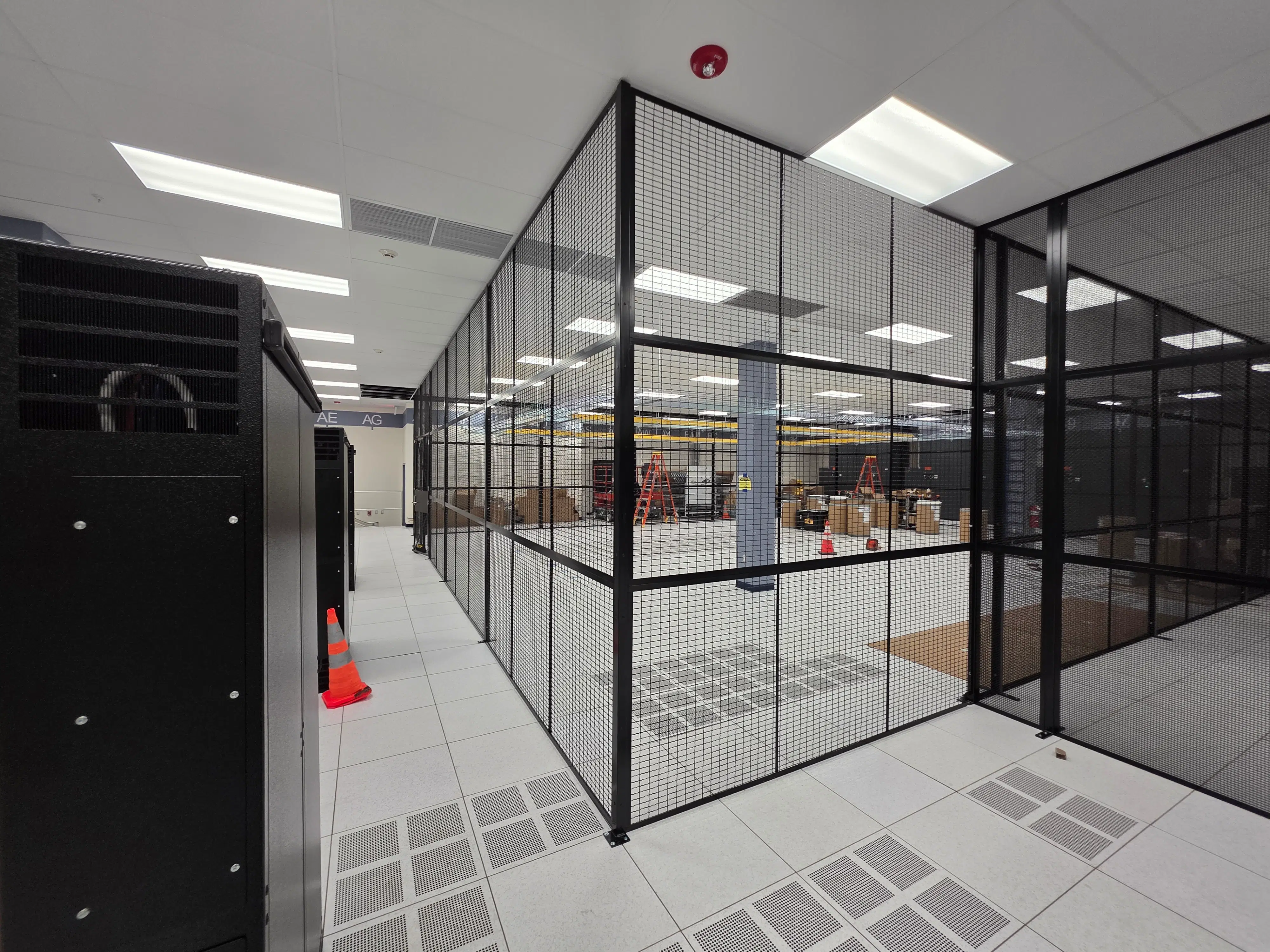
Because wire mesh is an open-cell design, it does not interfere with existing HVAC systems, lighting, or fire suppression. Air flows freely through the mesh, maintaining the temperature of the facility without the need for new ductwork. Most importantly, overhead sprinkler systems can penetrate the mesh, which often eliminates the requirement for a dedicated fire inspection for the internal space.
Installation of a modular system is a clean, dry process. There is no dust from sanding drywall, no fumes from paint, and no debris from framing. A standard 10'x10' inventory cage can be fully operational in a matter of hours. This rapid deployment allows businesses to secure their assets immediately, avoiding the months-long lead times associated with permanent builds.
Security Philosophy: Keeping Honest People Honest
Security is not just about stopping a determined intruder; it is about removing the opportunity for theft and maintaining organizational discipline. The U.S. CAGE philosophy is centered on the idea of the "Gold Standard": creating a clear, physical barrier that establishes a boundary.
A wire mesh partition serves as a visual and physical deterrent that helps "keep honest people honest." In a busy warehouse or retail environment, high-value items left in the open represent a temptation that can lead to internal shrinkage. By placing these items behind a heavy-duty steel barrier, the business creates a psychological and physical hurdle.
Unlike drywall, which hides the contents of a room, wire mesh allows for full visibility. Supervisors can perform a visual inventory check without needing to enter the cage. This transparency ensures that high-value products are accounted for at all times while still remaining restricted from general access. For retail applications like wireless stores or boutique electronics, a small format cage provides a professional, high-security enclosure that fits seamlessly into the back-of-house operations.
Small Format vs. Large Format Security Solutions
U.S. CAGE categorizes security needs into two distinct segments to ensure every facility receives the appropriate level of protection.
Small Format (Boutique/Specialized)
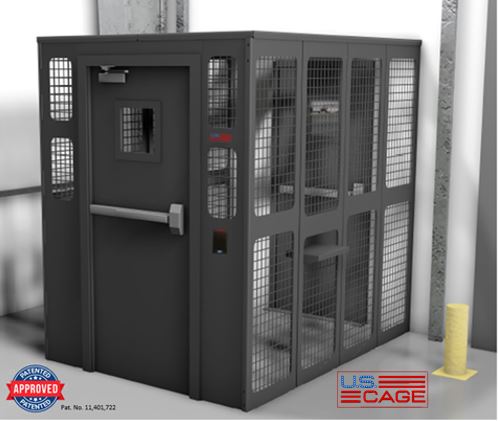
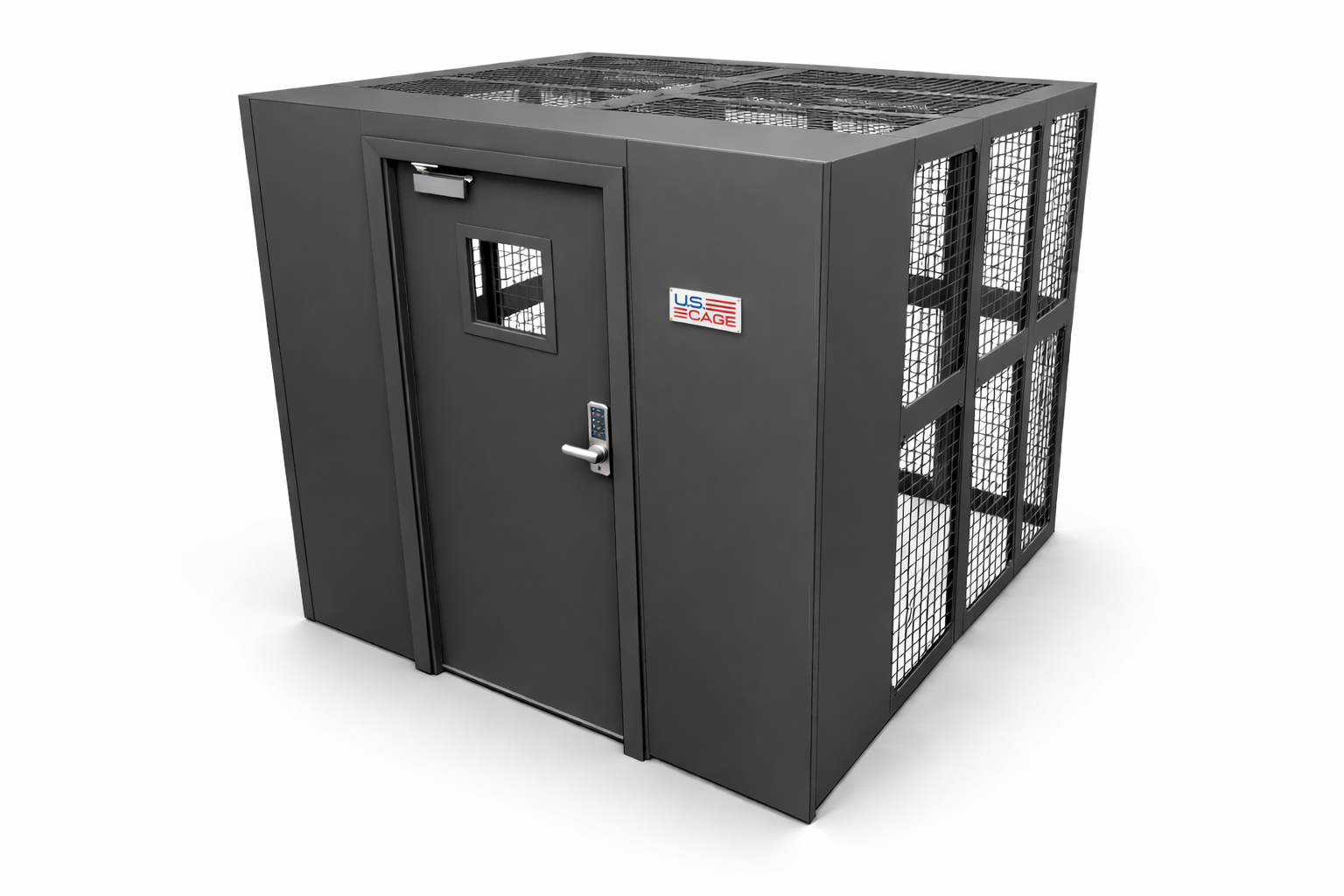
Small format cages are locally fabricated and typically measure around 8'x8'. These are ideal for retail enclosures, high-value parts storage, and mantrap applications. A key differentiator in the small format category is the commercial-grade door and frame. These units are engineered for high-frequency use and are designed for straightforward integration with standard low-voltage access control systems. This ensures that the cage is not just a barrier, but a functional part of the facility’s security infrastructure.
Large Format (Industrial)
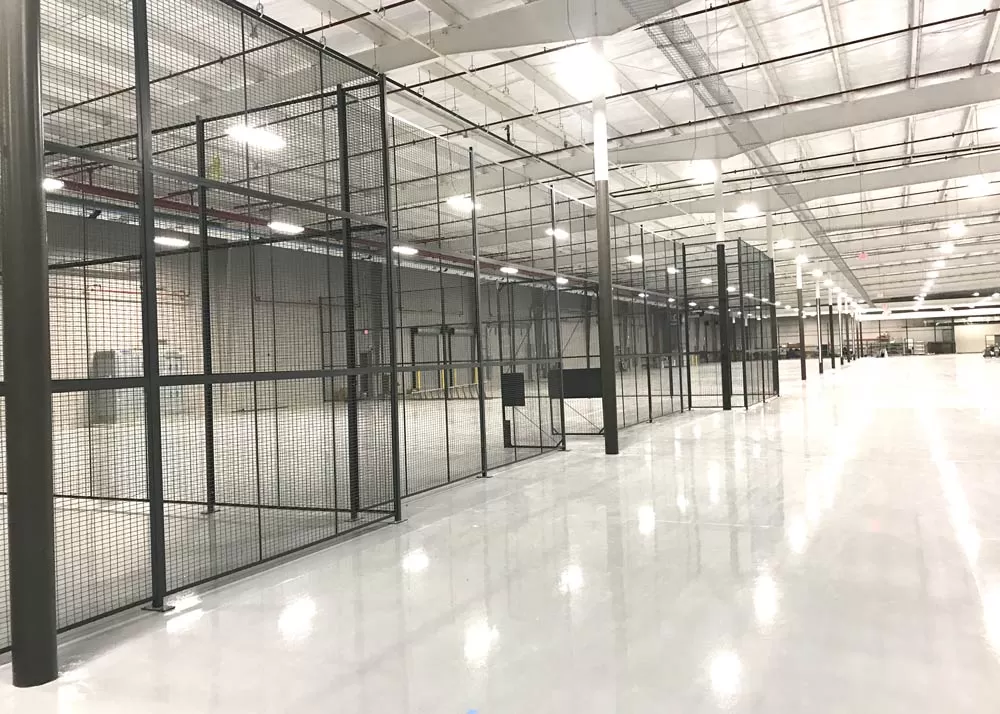
For larger scale operations, U.S. CAGE partners with industry leaders like WireCrafters and SpaceGuard to provide large format cages. These systems are designed for warehouses, data centers, and distribution hubs where scale and utility are the primary drivers. Large format partitions can span hundreds of feet and reach heights that would be structurally impossible or prohibitively expensive with drywall.
American-Made Quality and Long-Term Value
Reliability is a core component of the U.S. CAGE brand. Every wire mesh partition is an American-made product, built and sourced within the United States. This commitment to domestic manufacturing is not about performative gestures; it is a commitment to quality control and supply chain stability.
When a project depends on a specific timeline, waiting for imported materials can be a significant risk. American-made steel and local fabrication mean shorter lead times and a product that meets rigorous domestic standards. The modular design also provides long-term value that drywall cannot match. If a facility needs to relocate or expand, a wire mesh partition can be disassembled and reconfigured. A drywall room, once built, is a sunk cost that must be demolished if the facility layout changes.
Tangible Specifications for Decision-Makers
To assist facility managers in their evaluation, the following specifications highlight the practical advantages of modular wire mesh:
- Constructed from heavy-duty 10-gauge wire woven into a 2" x 1" opening pattern.
- Frames built from 1 1/4" x 1 1/4" x 1/8" steel angle for maximum structural integrity.
- Modular panels available in standard heights and widths to accommodate any floor plan.
- Compatible with various locking mechanisms including key locks, digital keypads, and biometric scanners.
- Finish options include durable powder coating for long-lasting protection against wear and tear.
- Hardware consists of high-strength bolts and nuts that are inaccessible from the exterior of the cage.
Conclusion
The true expense of building a secure area is measured in more than just the cost of materials. The time lost to permit purgatory, the frustration of coordinating multiple contractors, and the inflexibility of permanent construction represent significant hidden costs. By choosing the Modular Edge, businesses can secure their high-value assets with American-made, reliable, and scalable wire mesh partitions.
U.S. CAGE provides the Gold Standard in asset protection, offering a practical and proven alternative to the drywall trap. Whether the requirement is a small format retail enclosure or a large format warehouse partition, the focus remains on simplicity, efficiency, and dependable performance.
For more information on how to implement a modular security solution in your facility, visit the U.S. CAGE contact page to speak with a security specialist.