
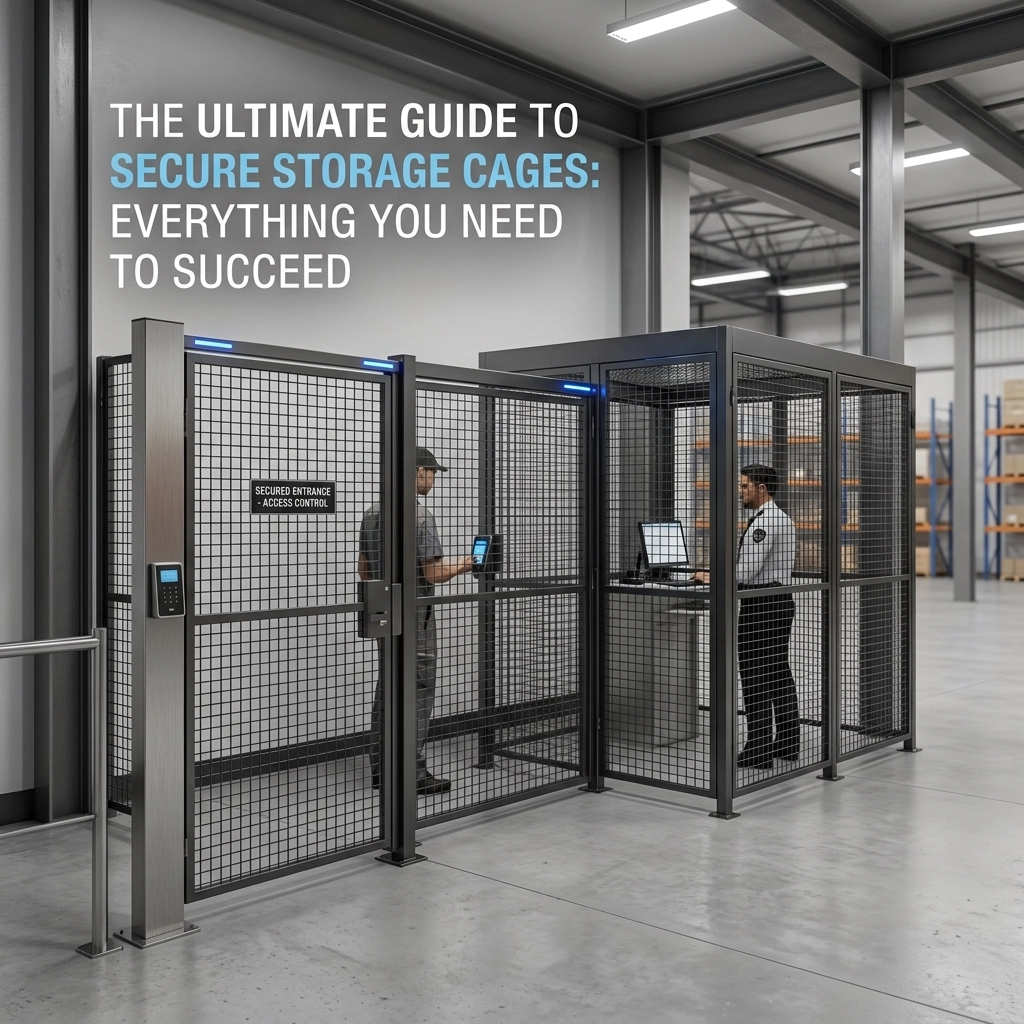
Secure storage cages are high-strength modular partitions designed to restrict access to valuable inventory, sensitive equipment, and hazardous materials in industrial and commercial environments. These steel-mesh enclosures provide a practical security layer that establishes clear physical boundaries while maintaining visibility, airflow, and fire suppression effectiveness. In modern facility management, a security cage serves as the primary defense against internal theft and unauthorized entry, effectively removing the opportunity for opportunistic loss.
The Modular Advantage: Cage vs. Wall
Permanent drywall or masonry construction presents significant logistical hurdles for expanding businesses. Traditional walls require building permits, professional architectural drawings, and lengthy inspection processes. They also necessitate the coordination of multiple trades, including framers, drywallers, painters, and electricians. This complexity often leads to project delays and increased capital expenditure.
Modular security cages are categorized as industrial furniture rather than permanent structures. This distinction allows most facilities to bypass the bureaucracy of local building departments. Installation is rapid and does not require permanent alterations to the building envelope. Unlike permanent walls, a modular cage offers total flexibility; panels can be unbolted, relocated, or reconfigured as business needs evolve. This "furniture-style" approach ensures that security investments remain an asset that can move with the company, rather than a sunk cost tied to a specific leasehold.

Engineering and Material Standards
The effectiveness of a security partition depends entirely on the quality of its components and the precision of its engineering. American-made security cages prioritize structural integrity and long-term durability over the cost-cutting measures found in imported alternatives.
- Construction Materials: Panels are typically fabricated from 10-gauge steel wire welded into a 2" x 2" square mesh pattern. This thickness provides high-strength resistance against cutting and impact.
- Frame Specifications: High-grade steel frames, often 1 1/4" x 1 1/4" x 1/8" angle iron, provide the necessary rigidity to prevent panel sagging or bowing.
- Finish Quality: Industrial-grade powder coating ensures a long-lasting, abrasion-resistant finish that withstands the rigors of a high-traffic warehouse environment.
- Hardware Security: Heavy-duty assembly hardware is designed to be tamper-resistant, with critical fasteners positioned on the interior of the cage to prevent external disassembly.
For facilities questioning the current state of their asset protection, assessing the physical barrier is the first step in determining if valuables are safe.
The SwiftConnect Innovation
One of the most significant advancements in physical security is the patented SwiftConnect system. Traditional wire partitions rely on a complex array of nuts, bolts, and specialized clips that require significant time and manual labor to install. The SwiftConnect system eliminates these traditional fasteners, replacing them with a precision-engineered interlocking mechanism.
This "no-nuts-and-bolts" design drastically reduces installation timelines. A two-person crew can often assemble a standard-sized enclosure in a fraction of the time required for a traditional bolt-together system. Because the system does not require specialized tools or extensive training, facility maintenance teams can perform the installation in-house, further reducing project costs. This ease of assembly does not sacrifice security; once locked into place, the panels form a rigid, monolithic barrier that is just as secure as a traditionally fastened cage.
Small Format vs. Large Format Applications
Security requirements differ significantly between a retail storefront and a million-square-foot distribution center. U.S. CAGE differentiates its offerings into two primary categories to meet these specific needs.
Small Format Solutions
Small-format cages are locally fabricated, boutique-style enclosures typically measuring around 10'x10'. These are engineered for retail environments, such as wireless stores, high-end pharmacies, or tech repair shops. A key differentiator in this category is the use of professional-grade commercial doors and frames. Unlike the flimsy doors found on budget partitions, these small-format doors are built for heavy daily use and straightforward integration with standard low-voltage access control systems. These units are often used to create driver cages and mantraps to control visitor access at shipping docks.

Large Format Industrial Solutions
Large-format security is designed for scale and utility. Sourced through industry-leading partners like WireCrafters and SpaceGuard, these systems are built to secure entire warehouse sections, tool cribs, or data center rows. In these applications, the focus shifts toward maximum coverage and standardized specifications. Large-format cages are ideal for palletized inventory storage where ceiling heights and racking integration are primary concerns.
Data Center and IT Infrastructure Security
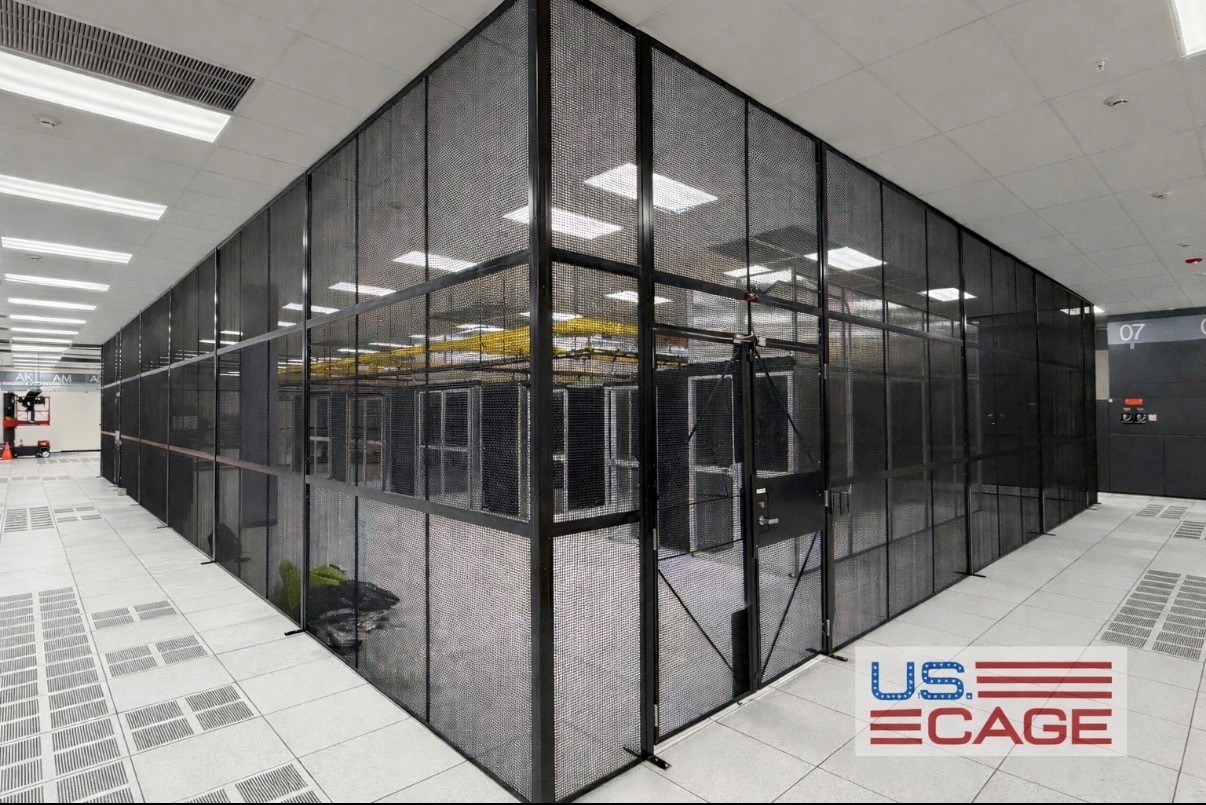
Data centers represent one of the most critical applications for wire mesh partitions. Server cages provide a necessary layer of physical security in colocation environments where multiple clients share the same floor space.
- Airflow Management: The open-mesh design allows for unrestricted airflow, which is vital for maintaining the thermal efficiency of server racks and cooling systems.
- Fire Suppression: Wire mesh does not obstruct overhead sprinkler systems, ensuring the facility remains compliant with fire codes without the need for additional in-cage plumbing.
- Asset Protection: Controlled access prevents unauthorized personnel from accessing hardware, reducing the risk of accidental cable disconnects or intentional data breaches.
Modern Access Control Integration
A physical barrier is only as effective as the technology controlling the entry point. Modern security cages are designed to be "tech-ready," allowing for the seamless installation of electronic security hardware.
Standard security cages are compatible with:
- Electromagnetic Locks (Maglocks): High-holding-force magnets that keep doors secured until released by a credential.
- Electric Strikes: Used with standard door hardware to allow for remote unlocking or keypad entry.
- Biometric Scanners: Fingerprint or facial recognition systems for high-security environments like pharmaceutical storage.
- Proximity Card Readers: The industry standard for employee access, allowing for detailed audit trails of who entered the cage and at what time.
By integrating these technologies, companies can transition from simple locked storage to a comprehensive asset management system. High-value items, such as those found in an 8×8 inventory cage, are protected by both physical steel and digital oversight.

Scalability and Future-Proofing
The primary reason businesses choose modular cages over permanent construction is the ability to adapt to growth. A cage that serves a warehouse today may need to be expanded next year. Because these systems are based on standardized panel sizes: typically 1 foot to 5 feet in width: adding square footage is a simple matter of ordering additional panels and posts.
Relocation is equally straightforward. If a company moves to a new facility, the security cage can be disassembled, palletized, and reinstalled at the new location. This longevity ensures a high return on investment (ROI). Furthermore, a wide range of accessories such as service windows, sliding doors, and specialized shelving can be added to existing cages at any time to improve workflow efficiency.
Compliance and Safety Standards
Using high-quality wire partitions helps facilities meet various regulatory and insurance requirements.
- DEA Compliance: Specific mesh sizes and floor-to-ceiling heights are often required for the storage of controlled substances.
- OSHA Requirements: Cages serve as effective machine guards, keeping personnel away from dangerous moving parts or high-voltage equipment.
- Fire Code Compliance: Most fire marshals prefer wire mesh over solid walls because it does not create "dead zones" for smoke detection or water distribution.
Implementation and Planning
Selecting the right cage starts with a clear assessment of the items being protected. For general warehouse use, a standard 6×8 hinged door inventory cage is often sufficient. For specialized applications, custom configurations may be required to work around existing obstructions like pipes, HVAC ducts, or structural columns.
The transition to a secure facility should be handled with a solution-focused mindset. By prioritizing American-made reliability, the ease of the SwiftConnect system, and the flexibility of modular design, facility managers can establish a security environment that is both formidable and adaptable. Physical security is not about creating an impenetrable fortress; it is about establishing a dependable layer of protection that removes the easy opportunity for loss and keeps honest people honest.
For more information on selecting the right configuration for your facility, explore the technical specifications and options available at U.S. CAGE.